One of my favorite parts of camping is cooking a good meal after spending the day in the great outdoors. This camping kitchen checklist covers the basics and then some for your own camp kitchen. Whether it’s a quick breakfast before hitting the trail or a more involved dinner around the campsite, there’s something about cooking outside that makes everything taste a little better.
But a good camp kitchen doesn’t happen by accident. Forget something as simple as a spatula, cutting board, or can opener, and suddenly preparing dinner becomes a lot more complicated than it needs to be.
Over the years, I’ve put together a collection of camp kitchen gear that covers everything from simple meals to more elaborate cooking. I typically organize everything in storage bins rather than using a dedicated camp kitchen box, which makes it easy to adjust what I bring depending on the trip.
This camping kitchen checklist covers the essential cooking equipment, food prep tools, storage supplies, and cleaning gear you’ll want for your next car camping adventure. I’ll also share how I approach organizing my setup and which items you can leave behind depending on what you plan to cook.
The Complete Camping Kitchen Checklist
Before we get into the details, here’s a complete list of camp kitchen essentials to help you get organized.
You probably won’t need every item on this list for every trip. A weekend of simple meals requires a lot less equipment than preparing elaborate dinners for a large group.
I like to start with the basics and then add whatever equipment I’ll need based on my meal plan.
Camp Stoves and Cooking Equipment
Your camp stove is the centerpiece of your cooking setup. It’s what you’ll rely on for everything from heating water for coffee to preparing a full dinner.
Essential cooking gear:
- Camp stove
- Stove fuel or propane
- Lighter or matches
- Cooking pots
- Frying pan
- Pot holder or heat-resistant gloves
- Pot lids
Optional cooking gear:
- Dutch oven
- Cast-iron skillet
- Campfire grill or grill grate
- Fire starters
- Griddle
- Extra cooking pots or pans
For most of my car camping trips, I bring a stove along with a selection of pots and pans. This gives me enough flexibility to cook simple meals or prepare something a little more involved.
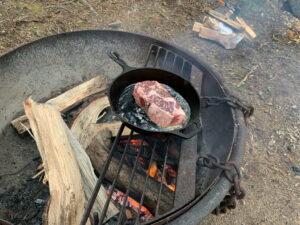
A Dutch oven or cast-iron skillet can be a great addition if you enjoy campfire cooking, but they’re certainly not necessities.
One thing to consider is your heat source. If you’re planning to cook over a campfire, make sure fires are permitted and bring the appropriate equipment. I still recommend packing a stove rather than relying entirely on a campfire.
Food Prep and Cooking Utensils
It’s easy to remember the stove and cookware while overlooking the smaller kitchen items that make cooking possible.
Food prep essentials:
- Cutting board
- Kitchen knife
- Spatula
- Cooking spoon
- Tongs
- Can opener
- Bottle opener
- Measuring cups or spoons
- Aluminum foil
- Cooking oil
- Salt, pepper, and seasonings
Optional extras:
- Vegetable peeler
- Whisk
- Cheese grater
- Kitchen scissors
- Mixing bowl
- Food thermometer
- Resealable plastic bags
I always make sure to bring cutting boards and cooking utensils. The exact tools I pack depend on what I’m planning to make.
If I’m keeping meals simple, I can get away with a knife, spatula, and cooking spoon. But if I’m preparing something more involved, I’ll add whatever else the recipes require.
Aluminum foil is another useful item to have around. It’s great for wrapping food, covering dishes, or preparing meals over a campfire.

Plates, Bowls, Cups, and Eating Utensils
Once you’ve cooked your meal, you’ll need something to eat it with.
Dining essentials:
- Plates
- Bowls
- Forks, knives, and spoons
- Cups or mugs
- Water bottles
- Coffee French press or coffee maker
- Coffee and other drinks
Optional extras:
- Insulated mugs
- Paper plates
- Reusable food containers
- Extra serving utensils
- Wine or bottle opener
I prefer bringing reusable plates, bowls, and utensils rather than relying on disposable options.
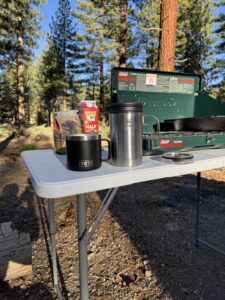
A French press is also a regular part of my camping kitchen. A good cup of coffee in the morning is one of those small things that makes camping even better.
There are plenty of ways to make coffee at camp, from instant coffee to a percolator or pour-over setup. Bring whatever works best for you.
Food Storage and Water Essentials
Keeping your ingredients organized and properly stored is just as important as having the right cooking equipment.
Food and water storage checklist:
- Cooler
- Ice or reusable ice packs
- Food storage containers
- Large water jug
- Drinking water bottles
- Storage bins for dry food
- Resealable bags
- Paper towels
Optional extras:
- Separate beverage cooler
- Water dispenser
- Insulated food containers
- Cooler thermometer
A cooler is essential if you’re bringing perishable foods such as meat, dairy products, or eggs.
I also recommend keeping dry ingredients and kitchen supplies organized in separate containers or storage bins. It makes it much easier to find what you need instead of digging through a pile of loose gear.
One other consideration is wildlife. Depending on where you’re camping, food may need to be stored in a designated bear-resistant locker or approved container. Always check the campground’s food storage requirements.
Camp Kitchen Cleaning Supplies
Cleaning up is probably the least exciting part of cooking at camp, but having the right supplies makes it a lot easier.
Cleaning essentials:
- Wash bin
- Sponge or scrubber
- Dish soap
- Dish towels
- Garbage bags
- Paper towels
- Hand sanitizer or hand soap
- Water for washing dishes
Optional extras:
- Collapsible sink
- Second wash bin for rinsing
- Dish drying rack
- Mesh strainer
- Reusable cleaning cloths
I typically bring a wash bin, sponge, soap, and garbage bags.
A wash bin is especially useful when you’re camping somewhere without a dedicated dishwashing station. It gives you a place to clean your dishes without needing a full kitchen sink.
Be sure to dispose of your wastewater properly. Don’t dump soapy water directly into lakes, streams, or other natural water sources. Follow campground rules for wastewater disposal, and pack out your food scraps and trash.
How I Organize My Camp Kitchen for Car Camping
One of the advantages of car camping is having the space to bring a more complete cooking setup.
Unlike backpacking, where every ounce matters, car camping gives you more flexibility to bring full-size cookware, additional utensils, and a few comforts from home.
That doesn’t mean you need to bring your entire kitchen, though.
Storage Bins vs. Camp Kitchen Boxes
I currently use storage bins to organize my kitchen equipment rather than a dedicated camp kitchen box.
For me, bins provide a flexible storage solution. I can organize my cookware, utensils, and other supplies and adjust what I bring depending on the trip.
A dedicated camp kitchen box, sometimes called a chuck box, is another popular option.
These boxes typically feature compartments or drawers designed to hold cooking equipment, plates, utensils, and other kitchen supplies.
Some even unfold into portable cooking stations.
They can be a convenient option, especially if you camp frequently and want everything organized in one place. However, they also take up storage space and can add weight and bulk to your setup.
If you’re just getting started, I wouldn’t worry about investing in a dedicated camp kitchen box. A couple of storage bins can work perfectly well.
Setting Up a Functional Cooking Station
Once you arrive at camp, having a dedicated area for cooking and food prep makes everything more convenient.
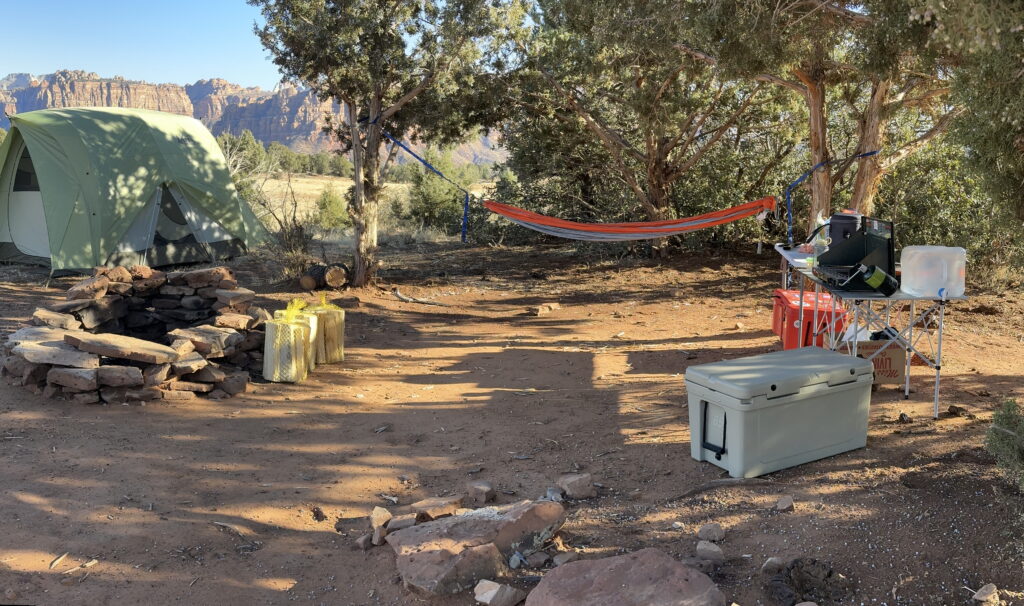
I typically bring a table as part of my kitchen setup. If the campsite has a picnic table, that can also provide a convenient place to prepare ingredients and organize supplies.
The goal is to keep your most frequently used items within easy reach.
A practical arrangement is to organize your camp kitchen into three areas:
- Cooking: Your camp stove, cookware, fuel, and cooking utensils.
- Food prep: Cutting board, knives, ingredients, and seasonings.
- Cleaning: Wash bin, sponge, dish soap, and garbage bags.
Keep your stove on a stable, heat-safe surface outdoors, away from tents and combustible materials, and follow the stove manufacturer’s clearance requirements.
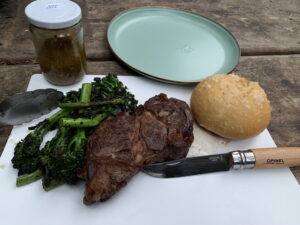
You don’t need an elaborate outdoor kitchen to cook good meals. A table, stove, and a few organized bins can go a long way.
Planning Your Camping Meals Before You Pack
One of the best ways to avoid bringing unnecessary cooking gear is to plan your meals before packing.
The equipment you need depends largely on what you’re planning to cook.
Simple Camping Meals vs. More Involved Cooking
I tend to do a mix of simple and more elaborate meals when car camping.
Sometimes I just want something quick that doesn’t require much preparation or cleanup. Other times, part of the fun of camping is spending a little more time cooking a good meal.
For simple camping meals, a basic stove, one pot or pan, and a few utensils may be all you need.
Think scrambled eggs for breakfast, sandwiches for lunch, or hot dogs and an easy side dish for dinner.
More involved meals might require multiple pans, additional cooking utensils, cutting boards, or specialty equipment like a Dutch oven.
The important thing is to match your kitchen setup to your menu rather than packing everything you own.
Food Prep and Meal Planning Tips
Before heading out, I recommend putting together a basic meal plan for each day.
Think through breakfast, lunch, dinner, snacks, and drinks.
Once you’ve figured out what you’re cooking, look at the equipment each meal requires.
A few simple ways to make camp cooking easier include:
- Measure and portion ingredients before leaving home.
- Chop vegetables or prepare other ingredients ahead of time when practical.
- Store ingredients for individual meals together.
- Bring only the cookware and utensils your meals require.
- Plan a few easy meals for days when you don’t feel like spending much time cooking.
- Double-check that you’ve packed the fuel, seasonings, and smaller utensils you’ll need.
Preparing ingredients at home can save a lot of time and hassle once you’re at camp.
And the less food prep you need to do outdoors, the less cleanup you’ll have afterward.
Optional Camping Kitchen Gear Worth Considering
Once you’ve got the essentials covered, there are plenty of additional items that can make your camp kitchen more versatile.
These aren’t things everyone needs, but they may be worth considering depending on your camping style.
Dutch oven: Great for cooking stews, baking, and preparing meals over charcoal or a campfire.
Cast-iron skillet: A versatile option for cooking over a stove or appropriate campfire setup, although the added weight makes it better suited to car camping.
Campfire grill: Useful for cooking directly over coals when campfires are permitted.
Collapsible sink: An alternative to a standard wash bin, especially if storage space is limited.
Extra camp table: Provides additional prep space, particularly when cooking for larger groups.
Dedicated camp kitchen box: Worth considering if you want a more permanent, all-in-one storage system.
My advice is to start with the essentials and add equipment as you discover what would improve your camping experience.
How a Backpacking Kitchen Differs from Car Camping
While this checklist focuses primarily on car camping, I’ve spent plenty of time backpacking, where kitchen setups are much simpler.
When backpacking, I almost always rely on dehydrated meals. That means my cooking equipment generally consists of a lightweight backpacking stove, fuel, a pot for boiling water, and an eating utensil.
There’s no need to carry multiple pans, cutting boards, or a full collection of cooking utensils.
It’s a completely different approach, but that’s part of the appeal.
With car camping, I enjoy having the flexibility to cook more elaborate meals without worrying as much about weight and space.
With backpacking, the priority is keeping my pack as light and efficient as possible.
Both approaches have their advantages, and the right setup depends on the adventure you’re planning.
Camp Kitchen Setup and Cleanup Tips
A little planning can make camp cooking more enjoyable and help keep your campsite clean.
Here are a few practical things worth keeping in mind:
Keep your kitchen organized. Store frequently used cooking utensils, seasonings, and ingredients where they’re easy to access.
Maintain safe food temperatures. Use a cooler thermometer and keep perishable foods at 40°F or below. Avoid leaving them unrefrigerated for more than two hours, or one hour when temperatures exceed 90°F.
Set up away from sleeping areas. Follow campground rules and maintain appropriate separation between cooking areas, food storage, and tents, especially in bear country.
Clean dishes promptly. Scrape leftover food into your trash, wash dishes in an appropriate container, and follow local wastewater disposal instructions.
Pack out your garbage. Bring enough trash bags for food packaging, scraps, and other waste. Never leave food behind or burn trash in the campfire.
Check fire restrictions. Don’t assume you’ll be able to cook over a campfire. Restrictions can change depending on the season and location.
The last thing you want is to arrive at a campsite with a great meal planned, only to realize you’re missing an essential piece of equipment or can’t use your intended cooking method.
Create Your Own Camp Kitchen Checklist
There’s no single camp kitchen setup that works for everyone.
What you bring depends on the meals you’re planning, how many people you’re camping with, the space available in your vehicle, and how elaborate you want your cooking setup to be.
For my trips, I like having the flexibility to cook both simple meals and more involved dinners. Using storage bins to organize my equipment makes it easier to adjust my setup based on the trip.
If you’re just getting started, don’t feel like you need to buy everything on this list.
Begin with the basics, figure out what you actually use, and add equipment as needed.
The most important thing is having a system that helps you get organized so you can spend less time worrying about forgotten gear and more time enjoying your adventure.
Ready to put your camp kitchen together?
At Plan | Pack | Discover, you can create your own customizable packing list or start with one of our premade lists. Add the cooking gear you need, check items off as you pack, and save your list for future trips.
Create Your Free Camping Packing List
Hi, I’m Dave — a laid-back adventure enthusiast based in Southern California with a deep love for the outdoors and all the unexpected joys it brings. Through Plan | Pack | Discover, I share my passion for hiking, camping, surfing, and backpacking — and help you get ready for your own adventures, too.