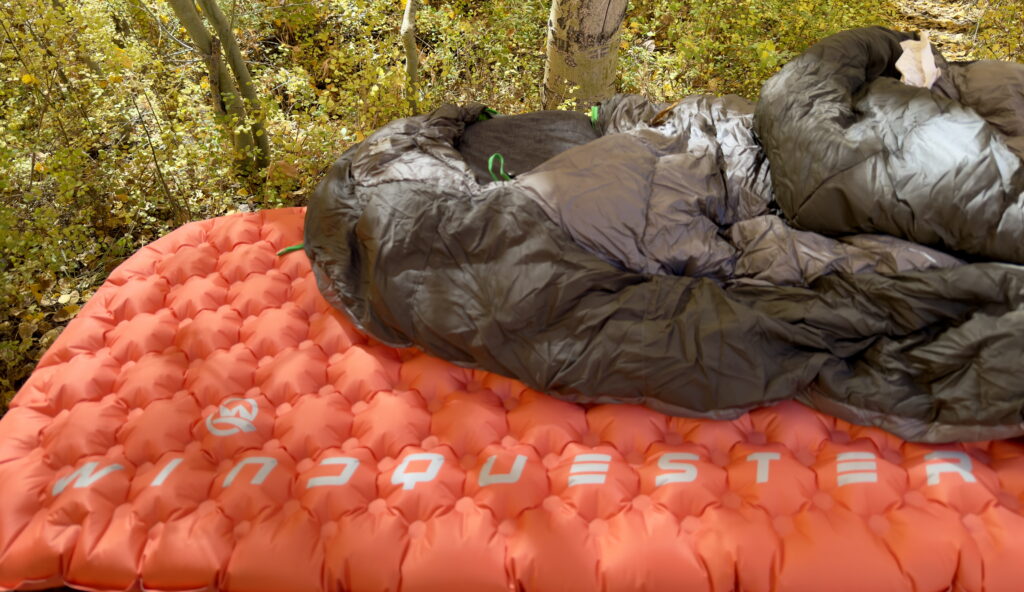
When it comes to backpacking gear, I’m always looking for that sweet spot between comfort, weight, and price. Finding the right balance isn’t always easy, especially when it comes to sleeping pads. You want something lightweight enough to carry on the trail, but comfortable and warm enough to get a good night’s sleep once you make it to camp.
So when WindQuester reached out and asked if I’d be interested in testing their Elevate X 4-Season Inflatable Sleeping Pad, I was interested. The combination of a 7.5 R-value, over 3 inches of thickness, a wider sleeping surface, and a $99 price tag looked pretty appealing.
For comparison, my go-to sleeping pad has been the NEMO Tensor All-Season, which is a great pad but comes with a higher price tag and a narrower sleeping surface on the baseline models.
I recently had the opportunity to put the Elevate X to the test during a four-night car-camping road trip, with temperatures dipping into the upper 30s°F and elevations reaching around 9,000 feet.
While I haven’t taken it backpacking yet, I’ve spent plenty of time on the trail and have a good understanding of the trade-offs between weight, packability, and comfort.
After four nights sleeping on the Elevate X, I came away impressed. And surprisingly, it wasn’t the high R-value that stood out the most. It was the extra width and how much more comfortable it made sleeping.
Disclosure: WindQuester provided me with the Elevate X sleeping pad for free to test and review. They did not place any conditions on the review or require positive feedback. All opinions shared here are based on my own experience. This article does not contain affiliate links.
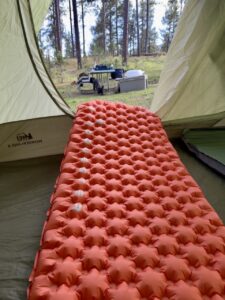
WindQuester Elevate X at a Glance
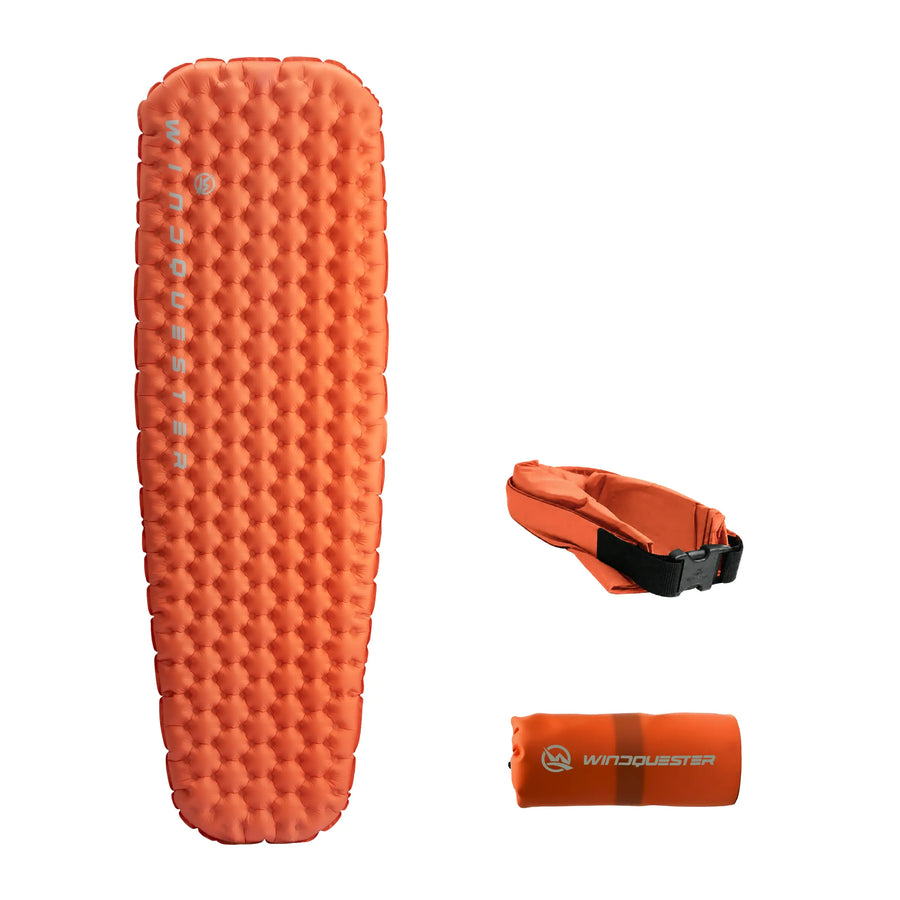
The WindQuester Elevate X is a four-season inflatable sleeping pad designed to provide a balance of insulation, comfort, and packability for camping and backpacking.
Here are the key specifications from WindQuester :
Elevate X: At a Glance
Wind Questor Elevate X

Comfort
Value
Warmth

Weight
Price: $99
Specs
| R-Value: | 7.5 |
| Weight (pad only): | 1 lb 6 oz / 630 g |
| Packed weight (with accessories): | 1 lb 11 oz / 768 g |
| Inflated dimensions: | 73.6″ × 23.2″ |
| Thickness: | 3.1″ |
| Packed dimensions: | 10.04″ × 3.94″ |
| Shape: | Mummy |
| Inflation: | Included pump sack |
| Material: | TPU-laminated recycled nylon |
Specifications are from WindQuester and may vary slightly by production model. Pricing is subject to change.
My Final Verdict
If you’re an ultralight backpacker counting every ounce, there are lighter options available.
But if you’re willing to carry a little extra weight in exchange for more sleeping space and potentially better comfort, the Elevate X is absolutely worth considering.
For me, the extra width alone made enough of a difference that I’d choose it over my NEMO on my next backpacking trip.
And at $99, that’s a pretty compelling argument.
Comfort - The Elevate X 4-Season boasts a 3.2 inch thickness with supportive horizontal baffles, providing a stable and comfortable sleeping surface suitable for back, side, and stomach sleepers. Its soft face material enhances comfort, reducing the likelihood of slipping during the night.
Value - Great Value for the Price: At $99, the Elevate X offers an impressive combination of comfort, insulation, and features at a more affordable price than many comparable backpacking sleeping pads.
Warmth - With an R-value of 7.5, the Elevate X 4-Season provides substantial insulation, suitable for four-season camping. This high R-value ensures warmth in various climates, reducing the need for multiple pads across different seasons.
Weight - A trade of the the additional insulation and width of the Elevate X, is its weight. Comes in heavier than some other sleeping pads in the same category.
Specifications are from WindQuester and may vary slightly by production model. Pricing is subject to change.
The combination of an R-value of 7.5 and a weight of around 1.6 pounds for the pad itself caught my attention. It’s not an ultralight sleeping pad, but on paper, it offers a good amount of insulation and sleeping space for the weight.
However, specifications only tell part of the story. What I really wanted to know was how comfortable it would be to sleep on, especially compared to my NEMO Tensor.
Comfort: Where the Elevate X Really Impressed Me
Of all the features of the Elevate X, comfort was easily the biggest standout.
I’m someone who sleeps on both my back and my side, and I’ve found that sleeping pad width can make a noticeable difference in how well I sleep.
My NEMO Tensor All-Season Regular is 20 inches wide. While I’ve been happy with the pad overall, one of my biggest complaints is that when I’m lying on my back, it’s difficult to rest my arms comfortably at my sides without them hanging off the pad.
It isn’t necessarily a dealbreaker, but it’s something I’ve always found a little annoying.
The Elevate X, on the other hand, is 23.2 inches wide at its widest point. That extra room made a bigger difference than I expected.
I could lie on my back with my arms resting comfortably at my sides, without feeling like I needed to keep them tucked against my body to stay on the pad.
It might not sound like a huge improvement, but when you’re trying to relax and fall asleep after a long day outside, those extra inches really do make a difference.
Comfortable for Both Back and Side Sleeping
The Elevate X also performed well when sleeping on my side.
At just over 3 inches thick, there’s plenty of cushioning between you and the ground. Throughout my four nights using it, I never felt my shoulders, hips, or elbows bottom out when the pad was properly inflated.
I also never had any issues with sliding off the pad during the night.
One thing I learned pretty quickly was that getting the inflation pressure right is important.
On one of the nights, I accidentally overinflated the pad. When I rolled onto my side, it felt too firm and wasn’t particularly comfortable.
Fortunately, the Elevate X has a valve that allows you to make small adjustments to the air pressure.
Without even getting out of my sleeping bag, I was able to release a little air and get the firmness exactly where I wanted it.
It’s a small feature, but one I appreciated. Nobody wants to climb out of their sleeping bag in the middle of a cold night just to adjust their sleeping pad.
Once I had the inflation dialed in, the pad was comfortable in both sleeping positions.
What About Noise?
Inflatable sleeping pads aren’t always the quietest pieces of camping gear. Some make a noticeable crinkling or rustling sound whenever you shift positions during the night.
Compared to my NEMO Tensor, the Elevate X seemed slightly quieter when moving around.
The difference was fairly subtle, at least to my ear, so I wouldn’t necessarily consider noise reduction a major reason to choose one over the other.
Still, it’s worth mentioning, especially if you’re a light sleeper.
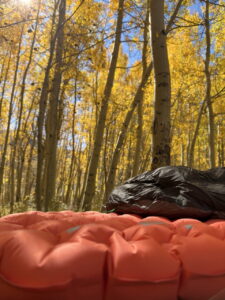
Warmth and Insulation: How Did the 7.5 R-Value Perform?
One of the Elevate X’s biggest selling points is its R-value of 7.5.
If you’re unfamiliar with R-values, they measure how well a sleeping pad resists heat loss to the ground. The higher the R-value, the better the insulation.
This is especially important when camping in colder conditions because even a warm sleeping bag won’t necessarily keep you comfortable if you’re losing heat through the ground beneath you.
WindQuester advertises the Elevate X as a four-season sleeping pad, and its published R-value suggests it’s designed to handle much colder conditions than I experienced during my trip.
Over the four nights I tested it, temperatures dropped into the upper 30s°F, and I camped at elevations reaching approximately 9,000 feet.
Throughout the trip, I stayed comfortably warm and didn’t notice any cold coming through the pad.
That said, I don’t think my testing conditions were cold enough to really evaluate the difference between the Elevate X’s 7.5 R-value and my NEMO Tensor’s 5.4 R-value.
Both provide substantial insulation, and I’ve been happy with the NEMO’s warmth as well.
While the Elevate X has the higher published insulation rating, I’d want to spend some nights camping in below-freezing temperatures before making any definitive claims about its winter performance.
For the conditions I experienced, though, it was more than warm enough.
Inflation, Deflation, and Packability
Another important consideration when choosing a backpacking sleeping pad is how easy it is to inflate, deflate, and pack away.
The Elevate X comes with a pump sack that allows you to inflate the pad without having to blow directly into it.
In my experience, it generally took around four to five sacks of air to fully inflate the pad.
The process was relatively straightforward, and I didn’t have any significant complaints about how the system worked.
One design choice I could do without, though, is the buckles on the pump sack. While I can see how it helps keep the sack closed during inflation, I personally never secured them when inflating the pad. The additional hardware feels like something I could do without, especially when trying to minimize bulk in my pack.
It’s not a major issue, but I prefer the simpler design of the NEMO pump sack.
How Small Does It Pack?
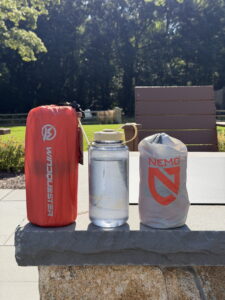
When packed away, the Elevate X is reasonably compact for an insulated sleeping pad of its size.
However, my NEMO Tensor does pack down a little smaller.
I that difference comes from the additional width, the extra insulation, and the pump sack. The NEMO’s pump sack is slightly smaller and doesn’t have the additional buckles found on the Elevate X.
The Elevate X is also a heavier pad overall, which is something to consider if you’re trying to keep your backpacking setup as light as possible.
As far as deflation and packing up go, I didn’t notice any meaningful differences between the Elevate X and other inflatable pads I’ve used.
Releasing the air, rolling it up, and getting it back into its storage bag were all straightforward.
It wasn’t noticeably easier than the NEMO, but it wasn’t any more difficult either.
What I’d Change About the Elevate X
Overall, my experience with the Elevate X was very positive, but there is one thing I wish WindQuester offered: a rectangular version of the pad.
Currently, the Elevate X has a mummy-style shape, meaning it tapers toward the feet. There are practical reasons for this design, particularly reducing material, weight, and packed size.
But personally, I prefer having the extra space that comes with a rectangular sleeping pad. Part of that preference comes down to camping with my dog, Dill.
Dill has her own sleeping pad, but that doesn’t always mean she stays on it. It’s not uncommon for her to decide she’d rather share mine at some point during the night.
Having the full 23.2-inch width of the Elevate X extend all the way to the bottom would give us a little more room to spread out.
Admittedly, this is a pretty specific complaint, and it may not matter to someone who camps solo or prefers the weight savings of a mummy-shaped pad.
But for me, a rectangular Elevate X would be an appealing option.
Beyond that, I’d simplify the pump sack by removing the unnecessary buckles.
Neither issue would stop me from recommending the pad, but they’re two changes I’d welcome in a future version.

WindQuester Elevate X vs. NEMO Tensor All-Season
Since the NEMO Tensor All-Season has been my primary sleeping pad, it’s a natural comparison for the Elevate X.
Both are well-insulated inflatable pads designed with backpackers in mind, but they approach the balance between comfort, weight, and price a little differently.
Here’s how they compare on paper.
| Feature | WindQuester Elevate X | NEMO Tensor All-Season Regular |
| Listed R-value | 7.5 | 5.4 |
| Width | 23.2″ | 20″ |
| Length | 73.6″ | 72″ |
| Thickness | 3.1″ | 3.5″ |
| Shape | Mummy | Rectangular |
| Pad weight | Approximately 22 oz | Lighter; varies by model |
| Packed size | 10.04″ × 3.94″ | Approximately 10″ × 4″ |
| Price | $99 | $199.95 |
Specifications are manufacturer-published; model revisions and accessory configurations can affect comparisons.
Where the Elevate X Wins
For me, the biggest advantage is sleeping comfort.
The wider sleeping surface makes it easier to find a comfortable position, particularly when lying on my back.
I also appreciate the higher advertised R-value and the lower price point.
The firmness adjustment valve was another feature I found useful, especially after accidentally inflating the pad too much.
Where the NEMO Wins
The NEMO is lighter, and in my experience, its complete setup packs away a little more compactly.
Those are meaningful advantages, particularly on longer backpacking trips where every ounce matters.
I also prefer the NEMO’s simpler pump sack.
And because my Tensor is rectangular, it provides a more consistent sleeping surface from head to toe, even though it’s narrower overall.
Which Would I Choose?
If I were heading out tomorrow on another four-night backpacking trip, I’d bring the Elevate X.
Even though it weighs more than my NEMO Tensor, I found the additional width noticeably more comfortable, and that’s a trade-off I’d be willing to make.
The fact that it comes at a lower price makes the decision even easier.
That’s not to say the NEMO isn’t an excellent sleeping pad. It absolutely is, and I can see why someone focused on minimizing pack weight would prefer it.
But for my camping style, comfort carries a lot of weight.
If you’re interested in the rest of my sleeping setup, you can check out What I Bring for My Backpacking Shelter.
Is the WindQuester Elevate X Worth It?
After four nights using the Elevate X, my first impressions are very positive.
The combination of comfort, insulation, and price makes it a compelling option for anyone looking for an insulated sleeping pad without spending a fortune.
The extra width was the biggest surprise for me. Going from a 20-inch pad to a 23.2-inch pad made a noticeable difference in my ability to get comfortable, especially when sleeping on my back.
It also provided plenty of cushioning when sleeping on my side, kept me warm during nights in the upper 30s°F, and was easy to inflate and pack away.
There are a few trade-offs.
It’s heavier than my NEMO Tensor, the pump sack could be a little simpler, and I’d love to see WindQuester offer a rectangular version.
I also haven’t put enough nights on it to say much about long-term durability, and my testing conditions weren’t cold enough to evaluate its advertised four-season performance.
But based on my experience so far, I think WindQuester has put together a very good sleeping pad at an attractive price.
My Final Verdict
If you’re an ultralight backpacker counting every ounce, there are lighter options available, including the NEMO Tensor.
But if you’re willing to carry a little extra weight in exchange for more sleeping space and potentially better comfort, the Elevate X is absolutely worth considering.
For me, the extra width alone made enough of a difference that I’d choose it over my NEMO on my next backpacking trip.
And at $99, that’s a pretty compelling argument.
Interested in checking it out? You can find more information about the WindQuester Elevate X directly on WindQuester ‘s website.
I’ll also be interested to see how it holds up over additional trips, especially when I have an opportunity to use it in colder conditions.
Hi, I’m Dave — a laid-back adventure enthusiast based in Southern California with a deep love for the outdoors and all the unexpected joys it brings. Through Plan | Pack | Discover, I share my passion for hiking, camping, surfing, and backpacking — and help you get ready for your own adventures, too.